
- par Ursus Negenborn
What Is Bartack Stitching and Why It Matters
- par Ursus Negenborn
If you have ever looked closely at a pair of jeans, a backpack strap, or a well-made bag, you have probably seen small dense blocks of stitching that goes at the end of seams. Those reinforced patches are bartack stitching, one of the most important techniques in modern textile manufacturing. So what is bartack stitching, and what does it do?
This guide walks through what bartack stitching is, how it works, where you find it, and why it matters for the durability of everyday products.
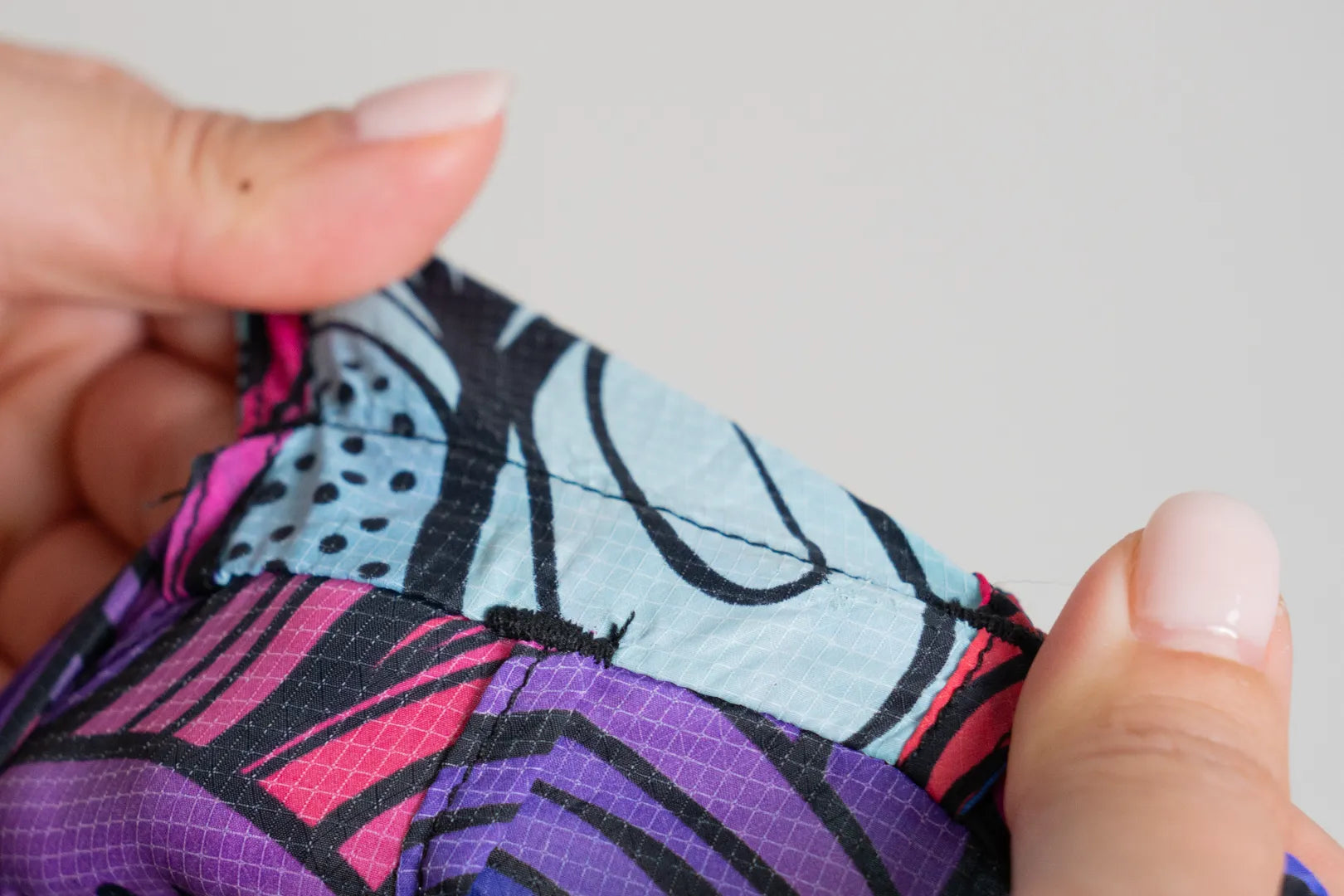
Bartack stitching is a dense, concentrated series of stitches packed into a small area, designed to reinforce stress points on textiles. Each bartack is a tightly packed cluster of stitches, usually 30+ individual stitches, sewn within a rectangular area roughly 5 to 10 millimeters across. The visible result is a short, dense bar of stitching, which gives the technique its name.
The purpose is straightforward. When a stress point would otherwise tear, the bartack absorbs the load through dozens of stitches working together. The end of a seam, a corner, or a strap attachment that would fail under stress instead holds.
The mechanics come down to two principles: Density and Direction.
The density of a bartack is what separates it from regular stitching. A standard seam might have 5 to 10 stitches per inch. A bartack packs that many stitches into a tiny area, with the stitches spaced fractions of a millimeter apart.
Bartack stitching is a textile industry standard that quietly determines whether a product holds up to real use.
The most familiar example is on jeans. The reinforced corners at the top of every pocket, the points where belt loops attach to the waistband, and the ends of zipper plackets all rely on bartack stitching to prevent tearing under daily wear. Pants without these reinforcements typically fail at exactly these points within a few months.
In bag manufacturing, bartack stitching reinforces strap attachments, base seams, zipper terminations, and any point where a handle meets the body of the bag. For backpacks, the shoulder strap connections at the top and bottom are bartacked because these points carry the entire load of the bag during use.
Beyond clothing and bags, bartack appears in workwear, climbing gear, military equipment, tool belts, sailcloth, and tents. Anywhere a textile faces concentrated stress, you will find bartack reinforcement at work.
Nanobag uses bartack reinforcement on stress points across the entire lineup. The handle attachments, base seams, zipper terminations all carry dense bartack stitching to prevent failure under load.
This reinforcement is part of what allows a Nanobag weighing less than an ounce to carry up to 66 lb. The custom diamond ripstop fabric provides tear resistance across the body of the bag, and the bartack stitching keeps the stress points intact under repeated use. Together, they allow the design to handle a full grocery shop, a travel day, or a beach trip without straining.
For ultralight gear specifically, where the base fabric is thin to save weight, the quality of the bartack reinforcement is often what determines whether a bag lasts for years or fails within a season.
Bartack stitching is the quiet engineering that makes everyday gear actually last. Wherever a textile faces concentrated stress, bartack reinforcement stands between regular wear and complete failure. When you are choosing a bag or any piece of gear that will see daily use, knowing the high-stress points are bartacked tells you something real about how it will hold up over time.

Partager:
How to Choose the Best Cycling Commuter Backpack
How Much Weight Can Reusable Bags Hold? A Realistic Answer