- von Ursus Negenborn
How to Choose the Best Foldable Bag for Daily Use
- von Ursus Negenborn
Most people who buy a foldable bag use it for a few weeks, then it disappears into a drawer. The fold is too fiddly. The bag is too bulky once folded. It takes up enough space in a pocket or purse that you stop bothering. The whole point of a foldable bag is that it lives with you, ready the moment you need it, not stored somewhere you have to remember to grab it from.
There are a lot of foldable bags on the market, and ranking them is not the point of this guide. Instead, this is a clear breakdown of what a great foldable bag genuinely needs to do for everyday use, so you can judge any option against the same standard. By the end, you will know what to look for and which Nanobag size and style fits the way you live.
A foldable bag earns its place by being so easy to carry that it is always with you. These are the features that separate a foldable bag you reach for every time from one that ends up in a drawer.
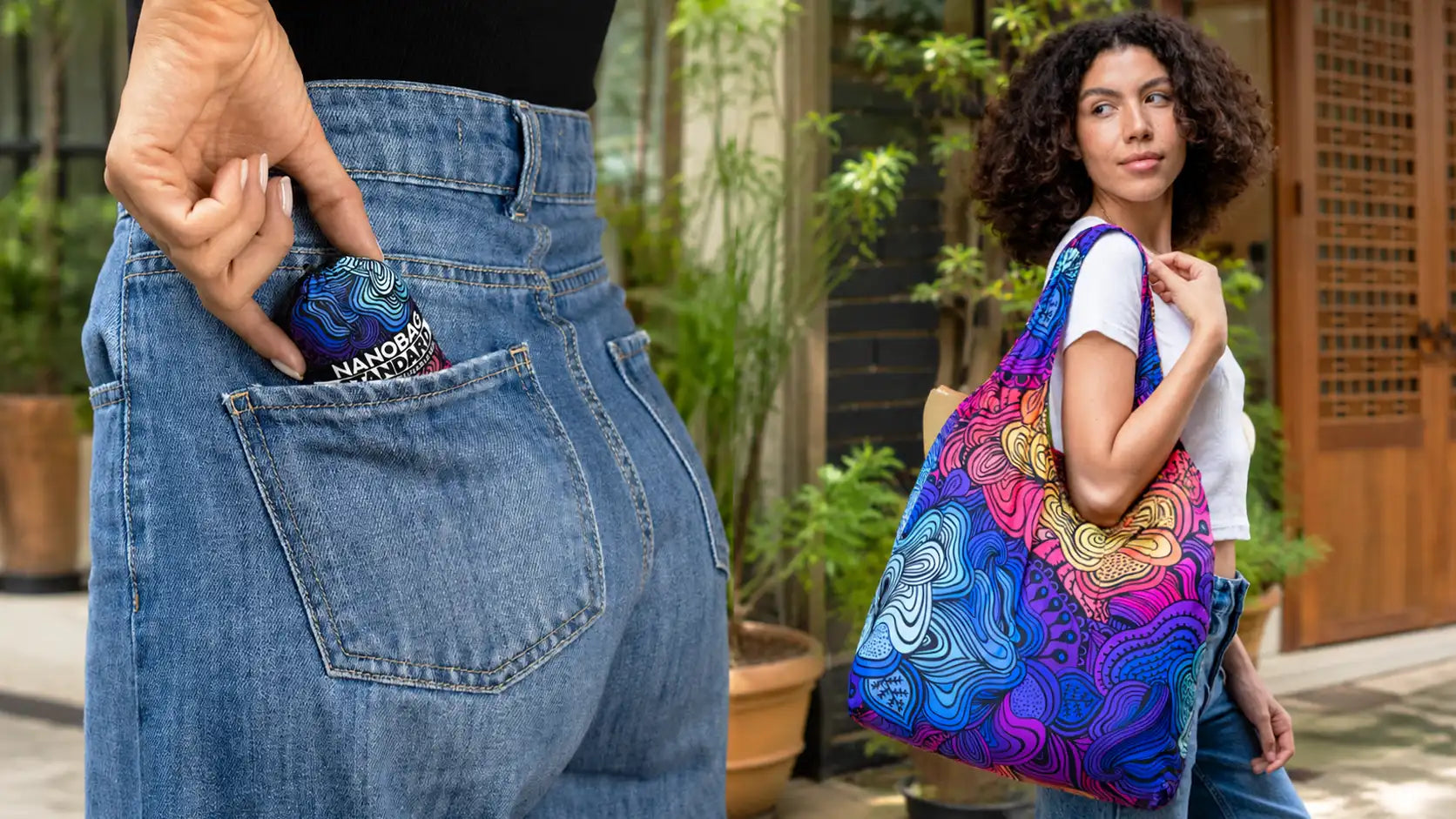
A foldable bag has to fold down small enough to disappear into a pocket, a purse, or a glove box. Anything larger than that and you end up choosing whether to bring it, which defeats the entire purpose. The best foldable bags pack to the size of a small pouch, not the size of a wallet or a paperback book.
If folding the bag back down takes more than a few seconds or requires a step-by-step technique, the bag will not stay folded. It will get shoved into a corner and forgotten. The best collapsible bags pack down by being stuffed into an attached pouch, not by being folded into precise patterns.
Compact packed size means nothing if the open bag is too small to be useful. A genuine compact reusable bag has to handle real shopping trips, errands, and unexpected purchases. For most daily use, that means somewhere in the 10 to 25 liter range when open.
Daily use means real exposure. Heavy groceries, sharp corners, packed transit, dropped on a kitchen counter. A foldable bag has to hold up to that without tearing or losing its shape. Reinforced stitching at the stress points and a fabric engineered to resist tearing make the difference between a bag that lasts a few months and one that lasts for years.
A bag designed for daily life will get caught in rain, set down on damp surfaces, or used to carry condensation-covered cold drinks. A water-repellent finish keeps your belongings dry and makes the bag easy to wipe down afterward.
A loaded foldable bag can dig into your hand on a longer walk. Handle design matters here. Wider or layered handles spread the weight across your hand or shoulder and stay comfortable even with a full load.
Here is how Nanobag was built to meet each point:
Compact: Every Nanobag packs into an attached integrated pouch small enough to fit in any pocket. Weights range from 0.80 oz for the Micro to 1.15 oz for the Daypack, so even the heaviest model is barely noticeable in a coat pocket or purse.
Fast deploy: No folding technique is required. Stuff it into the attached pouch and it is done. Pull it out and it opens in one motion. The lineup is engineered to fold and unfold in seconds, every time.
Capacity: The lineup covers the practical foldable bag range. The 12L Micro suits minimalist daily carry, the 19L Standard handles a typical grocery run, and the 25L XL covers larger hauls. The Sling carries 19L in a hands-free crossbody format, and the Pack and Daypack offer 14L and 16L backpack styles respectively.
Strength: Every Nanobag carries up to 66 lb and uses bartack reinforcement at every stress point, the same construction approach found in technical outdoor gear. The diamond ripstop fabric is engineered to hold real weight without straining at the seams.
Water resistance: Every Nanobag has a PFC-free water-repellent coating that keeps your items dry, and prevents dust and particles from sticking to your bag.
Comfort: Nanobag tote models feature triple-layered handles built to stay comfortable in the hand or over the shoulder. The Sling uses a 20-inch reinforced crossbody strap for hands-free carry, the Pack uses a 31-inch drawstring backpack closure, and the Daypack uses wide backpack straps for all-day comfort.

It comes down to how you use a foldable bag. If you want the absolute lightest option for daily essentials and unplanned stops, the 12L Micro is the natural fit. For a versatile open tote that handles a typical day, the 19L Standard is the most common starting point. For larger hauls, the 25L XL gives you the room. The 19L Sling offers the same capacity hands-free with a crossbody strap. The 14L Pack is a drawstring backpack for active days, and the 16L Daypack adds a YKK zipper when security matters. You can compare every option in the foldable bags collection.
If you are not sure which one suits you, the Nanobag size guide walks through every model with real capacity examples. A lot of people end up with two: a Standard or XL for the main load and a Micro to keep on them at all times. Since each one packs to pocket size, carrying more than one adds almost nothing.
Independent recognition counts for more than any claim a brand makes about itself. The Nanobag Standard was named Best Tote in Nomads Nation's 2025 Power Rankings, chosen for packing smaller than competing totes while still carrying a full load. Pack Hacker's hands-on review similarly highlights the bag's ultra-packability and notes that its water-repellent coating holds up under real testing, with the interior staying largely dry even after a thirty-second blast under a sink tap. The brand has also picked up steady coverage from independent gear and travel publications.
Beyond that, over 200,000 customers carry Nanobags worldwide. The verdict that matters most, though, is whether the bag is with you every time you need it. A foldable bag that quietly lives in your pocket day after day is the one that earns its place in your daily routine.
The best foldable bag is the one you actually use, and the surest way to use one every day is to choose a bag light and compact enough to always be with you. Measure any option against the criteria here, true compactness, fast deployment, real capacity, strength, water resistance, and comfort, and you will know what to look for. When you are ready to choose, you can check out all the models in the foldable bags collection.
Teilen:
How to Choose the Best Lightweight Travel Bag
How to Choose the Best Personal Item Bag