- by Ursus Negenborn
How to Choose the Best Day Hiking Backpack
- by Ursus Negenborn
Day hiking puts real demands on a bag. It has to carry water, snacks, and layers across hours of variable terrain, sit comfortably on your back, and handle the kind of weather that can shift twice in an afternoon. Choosing the best day hiking backpack starts with understanding what your hike actually involves, then matching a bag to those demands without adding weight you do not need.
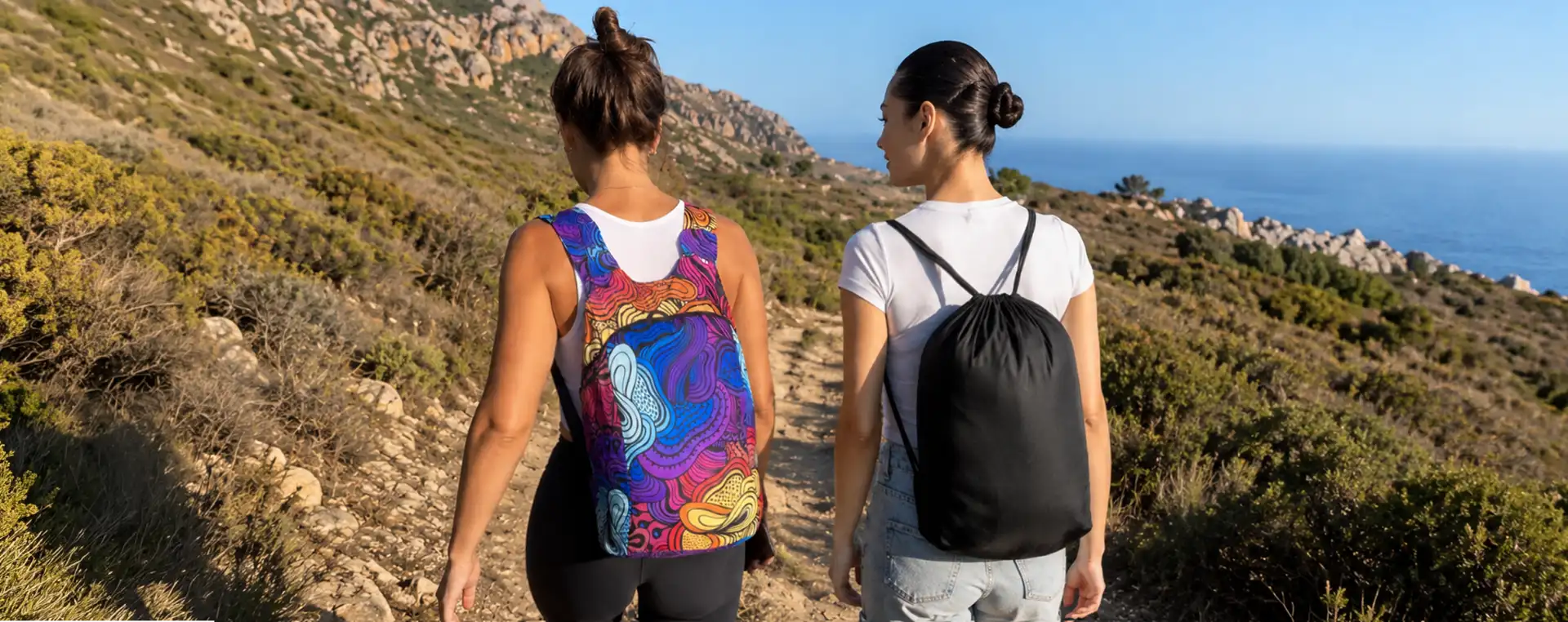
This guide breaks down what a day hiking backpack genuinely has to do. The Nanobag lineup sits among the best daypacks for casual day hikes, travel hiking, and lighter trail days where ultralight packability earns its place.
A day hiking backpack earns its place by handling the trail, the weather, and the wear without becoming another thing to manage. These are the features that separate the bags worth carrying from the ones that get left behind after one season.
For most day hikes, 14 to 20 liters covers water, snacks, a jacket, and the basics. A small day hiking backpack at this size suits short hikes, light loads, and travel hiking where the bag also needs to pack down without taking up room in your main luggage.
A lightweight backpack for day hiking leaves your carrying allowance for what you actually need on the trail rather than the bag itself. Most structured hiking daypacks weigh between 1 and 2 pounds empty, while ultralight options run from a ounce up to half a pound.
Day hikes mean wearing the bag for hours at a time. Wide, well-designed shoulder straps spread the weight comfortably across your shoulders and stay comfortable across long days on trail. The strap width, the placement, and the way the bag distributes its load all matter more by the third hour of a hike than they did at the trailhead.
A day hiking pack needs to carry water, snacks, and a layer or two without becoming hard to access. A bag with a fast-opening main compartment makes it easy to reach water and snacks throughout the day. The wider the opening, the less you fight the bag while still on the trail.
Day hiking exposes a bag to brush, rocks, and accidental snags. Ripstop fabric, reinforced stress points, and quality stitching are what separate a bag that lasts seasons from one that fails after a few hikes. Material choice matters more than it tends to get credit for.
Weather on a hike can change without warning. A water-repellent coating keeps your phone, snacks, and spare layers dry through a passing shower. For heavy rain, a rain cover or a fully waterproof material is worth considering. Either way, knowing your bag handles a surprise shower is worth more on the trail than it sounds like it should be.
For travelers who hike, the pack often has to fit inside a main bag on the way to the destination. A daypack that folds down small turns into a travel asset rather than a logistical problem. Few traditional hiking packs do this well. Packable daypacks built for travel fill this specific gap, and they have become a category of their own for hikers who fly to their trails.
Here is how Nanobag was built to meet each point for day hiking use:
Capacity: The 16L Daypack and 14L Pack both fit the smaller end of the day hike range, which suits casual day hikes, shorter trails, and travel hiking where the bag also needs to fold down.
Weight: Nanobag is one of the lightest options available. The Daypack weighs 1.15 oz and the Pack weighs 0.95 oz, compared to a typical hiking daypack at 14 to 30 ounces. For anyone looking for a lightweight backpack for day hiking, the weight difference is significant across a full day on trail.
Straps: The Daypack uses wide backpack-style straps designed for comfortable all-day wear, with the load distributed evenly across both shoulders, while the Pack uses slightly more narrow drawstring straps.
Closure and access: The Daypack uses a YKK zipper for secured carry across rough terrain. The Pack uses a drawstring closure that opens quickly for active use. The main compartment in both models opens wide for easy access to water, snacks, and layers throughout the day.
Durability: Both models use diamond ripstop fabric with bartack reinforcement at every stress point. The Daypack and Pack each carry up to 66 lb, well above what a typical day hike load requires. The fabric handles brush, light rocks, and trail wear without straining.
Weather resistance: Every Nanobag has a PFC-free water-repellent coating that sheds water rather than soaking it up. The finish handles light rain and trail moisture and keeps the inside dry through a passing shower.
Packability: This is where Nanobag specifically differentiates among day hiking options. Every model folds into an attached integrated pouch small enough to fit in any pocket. The fabric is unusually compressible, so no folding technique is required. You can just stuff the bags for easy storage in the attached pouch, or even store them unfolded in your pocket. The unique material ensures that they take up minimal space. For travelers who hike, a Nanobag practically disappears inside your main luggage on the way to the destination and deploys in seconds at the trailhead.

It comes down to the kind of hike you actually have planned. For a casual day hike with water, snacks, a layer, and basic essentials, the 16L Daypack is the natural fit. The YKK zipper keeps everything in place, and the wide backpack-style straps are built for hours of comfortable wear. For more active hiking days where speed of access matters and the load is lighter, the 14L Pack with its drawstring closure offers an alternative. Either model works as a small hiking daypack for travelers who do day hikes as part of a larger trip, because both pack into a pocket-sized pouch when not in use.
If you are not sure which one suits you, the Nanobag size guide walks through every model with real capacity examples.
Independent recognition counts for more than any claim a brand makes about itself. The Nanobag Daypack was featured in MrWhosTheBoss's Best Tiny Tech series, recognized for delivering a full-size packable backpack in a footprint small enough to disappear into a pocket. BuzzFeed editors also picked the Nanobag for their February 2026 Tested & Loved roundup. The lineup has also been featured by Pack Hacker, Yanko Design, The Grommet, and Forbes among other publications, each highlighting different angles of the design.
Beyond the press, over 200,000 customers carry Nanobags worldwide, including travelers who use the Daypack for casual hikes and day-trip exploring. The verdict that matters most for a hiking bag is whether it still feels right at the end of a full day on trail, and a bag light enough to barely register on your back is the one that earns its place in your kit.
Match the bag to the day hike rather than the other way around. The right pick is the one that handles your typical trail without becoming another thing to manage. The Nanobag Daypack delivers this with pocket-sized packability, a 66 lb load capacity, and a 1.15 oz empty weight, so the bag stays out of your way through every mile.
Share:
Sling Bag vs Backpack: Which Carries Better for Movement?
What Is Ripstop Fabric? A Complete Guide