
- by Ursus Negenborn
The Ultimate Packing Light Guide for Carry-On Only Travel
- by Ursus Negenborn
There is a moment at baggage claim that most frequent travelers know well. You have already walked through arrivals, cleared customs, and found a coffee. Everyone else is standing at a carousel, staring at it hopefully, waiting. And then your bag does not come out. Or it comes out last. Or it comes out damaged. It is one of the most predictable frustrations in modern travel, and it is entirely avoidable.
Knowing how to pack a carry-on properly is one of the most useful skills you can develop as a traveler. It saves you money on checked bag fees, saves you time at check-in and on arrival, and gives you a kind of freedom that heavy luggage simply cannot.
This guide covers everything you need to know about carry-on bags for international travel: the rules, the method, the clothing strategy, the toiletry workarounds, and the one small bag that most experienced travelers swear by.
The first step to packing a carry-on correctly is understanding what the limits actually are, because they vary more than most people expect. For US domestic flights on major carriers like Delta, United, and American, the standard carry-on size limit is 22 x 14 x 9 inches, including wheels and handles. Most international routes follow similar dimensions, but budget carriers in Europe and Asia often impose stricter size and weight limits. Always check your specific airline's policy directly on their website before you travel. Rules change, and the penalty for discovering a size violation at the gate is a forced bag check you did not budget for.
The most misunderstood rule is the TSA 3-1-1 liquid rule, which the Transportation Security Administration states clearly: all liquids, aerosols, gels, creams, and pastes in your carry-on must be in containers of 3.4 ounces (100ml) or less, and all containers must fit within a single clear quart-sized zip-top bag, one bag per passenger. Even a bottle that is mostly empty but has a container over 3.4 ounces is not permitted. A container of 6 ounces with only 1 ounce left still fails the rule.
Certain items are exempt: prescription medications in reasonable quantities, breast milk and formula, and duty-free liquids sealed in tamper-evident packaging purchased after security. For everyday toiletries, the rule applies without exception.
Write down every item you think you need, then go through it a second time and ask whether each one genuinely earns its place. If two items do the same job, bring one. The 5-4-3-2-1 rule works well for most trips: five pairs of underwear and socks, four tops, three bottoms, two pairs of shoes, and one destination-specific item like a swimsuit or light jacket. For a week-long trip with one laundry stop, this is more than enough.
Rolling clothes creates tighter, more uniform cylinders with fewer air gaps. Roll thinner items like t-shirts and leggings. Lay structured jackets flat along the back of the bag. Combining rolling with packing cubes adds organization without adding bulk. Use separate cubes for tops, bottoms, and undergarments so you are never unpacking the entire bag to find one item.
Tuck socks, chargers, or small items inside shoes so no space goes to waste. Place heavier shoes near the wheels or bottom of the bag to keep the weight low and the bag balanced when upright. For carry-on only trips, two pairs covers almost every scenario. Wear the bulkier pair to the airport and pack the lighter one.
Switching to solid versions of liquid products where possible is the simplest solution. Bar shampoo, solid conditioner, and bar soap take up no liquid allowance. For products you cannot replace with solids, use 30ml or 50ml refillable silicone bottles. A single clear quart-sized bag keeps everything accessible at security and forces an honest edit of what you are actually carrying.
Most airlines allow one carry-on and one personal item. The personal item, which fits under the seat in front of you, is one of the most underused tools in the carry-on traveler's toolkit. Choose something you genuinely want to use at your destination rather than a purely functional travel bag.A packable tote or crossbody serves both purposes: it holds in-flight essentials and becomes your day bag the moment you land.
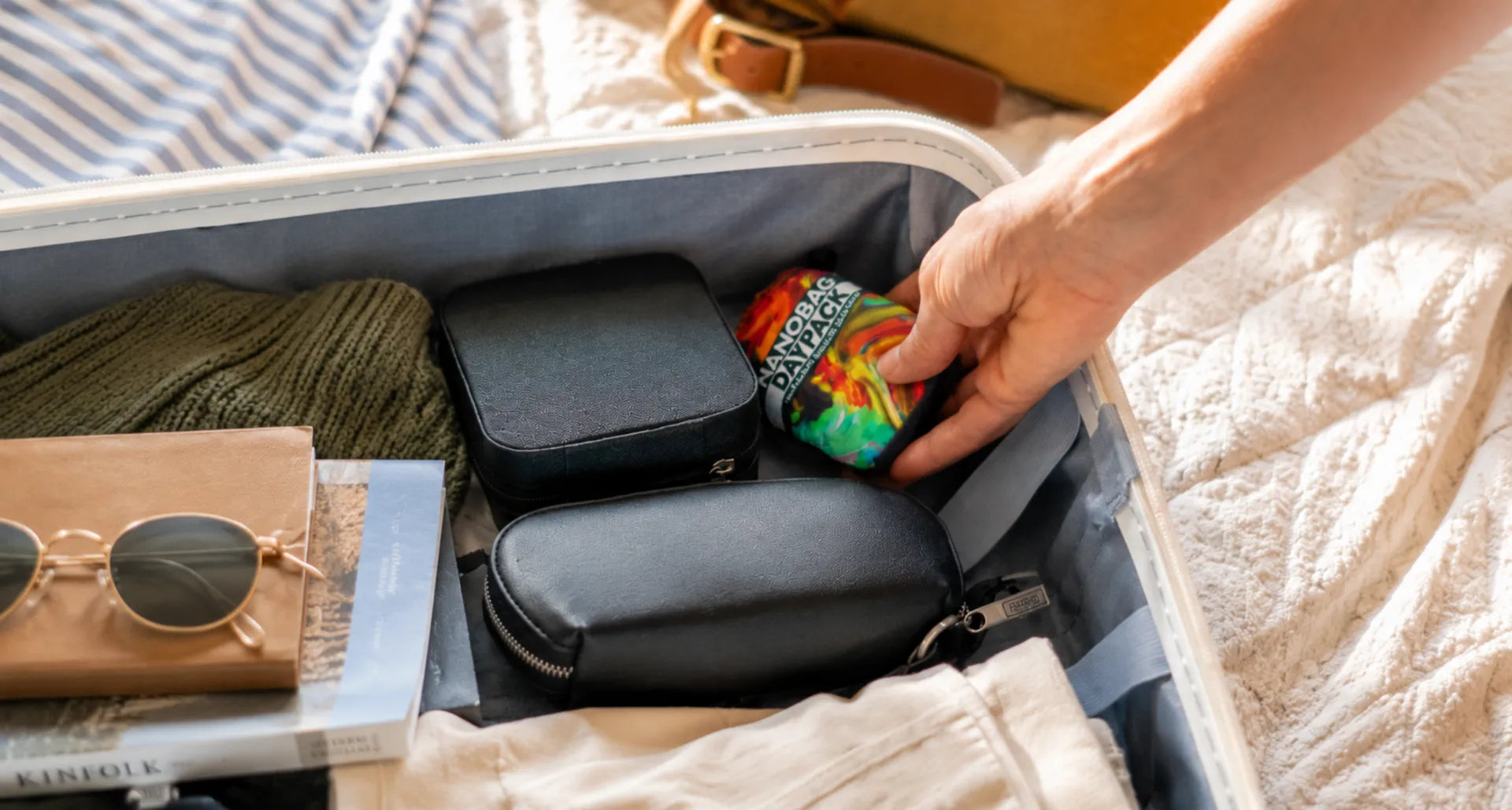
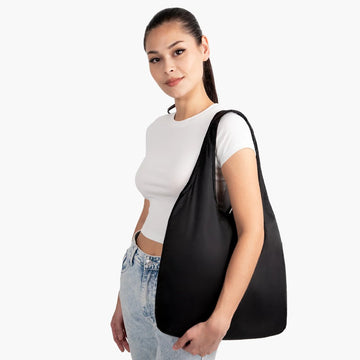
The Nanobag foldable reusable bag is the ideal solution for these travel needs. Our ultralight tote, weighing a mere 0.80 oz and compressing to golf-ball size, fits effortlessly into your carry-on or personal item. Upon arrival, it unfolds in seconds to support up to 66 lb for market visits or sightseeing. Beyond totes, our collection includes slings and the zippered Nanobag Daypack, which is perfect for excursions. With a Nanobag, travelers never need to worry about purchasing plastic bags or searching for extra luggage at their destination.
Always check the most restrictive airline on your itinerary, not just your main carrier. Connecting regional flights in Europe and Southeast Asia regularly have tighter limits. FAA regulations require that laptops, tablets, and lithium-ion batteries travel in carry-on luggage only, which applies to every airline operating to or from the United States. And for long-haul flights, keep one complete change of clothes in your carry-on in case checked luggage is delayed or lost.
Choose a neutral color palette so every piece works with every other piece, turning five items into fifteen outfits. Choose quick-drying fabrics. Merino wool and technical travel fabrics can be rinsed in a hotel sink and dry overnight, meaning you genuinely need fewer items. Plan actual outfit combinations before you pack, not individual items. Redundant pieces become obvious immediately.
Wear your heaviest and most voluminous items to the airport. A thick jacket, boots, and chunky knitwear worn onto the plane take up no space in your bag at all.
Pack per TSA guidance: heavier items near the wheels, electronics on top for easy removal at screening, and your 3-1-1 bag last so it comes out first. In your personal item, keep passport and documents, phone and charger, medications, earphones, a light layer, and your Nanobag for use on arrival. Everything else goes in the overhead bin.
One of the quieter benefits of carry on only travel is that it changes your relationship with buying things while travelling. When you have limited space, you stop buying things you do not need, which makes the purchases you do make more intentional. A scarf from a local market, a food product you cannot find at home, a gift that actually means something.
What experienced carry-on travelers consistently report is that after the first trip done this way, they rarely want to go back. The airport becomes faster. Arrivals become simpler. The trip starts the moment you land rather than forty-five minutes later at the carousel.
Pack a Nanobag before you leave. It weighs under an ounce, takes up nothing, and gives you a full-sized reusable shopping bag the moment you need one anywhere in the world.
Share:
How to Reduce Plastic Waste: 10 Daily Habits That Work
How to Pick the Right Nanobag Size for Your Needs