

- by Ursus Negenborn
Ripstop Nylon vs Jute: Which Is More Practical?
- by Ursus Negenborn
Ripstop nylon and jute are two very different materials used for reusable bags. The short answer is that ripstop nylon is more practical for everyday carry. It folds into a pocket-sized pouch, weighs less than an ounce, and stays with you between trips. Jute is heavier, bulkier, and does not compress, so a jute bag lives in the car or by the door rather than in your pocket.
Jute has legitimate strengths, including a rustic look and strong load-carrying ability. But if the question is which material actually gets used every day, the answer comes down to which one is with you when you need it. That is where the two materials separate the most.
Ripstop nylon is a synthetic fabric made from nylon fibers woven in a diamond or crosshatch pattern, with reinforcement threads at regular intervals that stop small tears from spreading. Nylon is already one of the strongest lightweight synthetic fibers, and the ripstop weave adds a second layer of tear resistance on top of that base strength.
Nanobag uses a custom diamond ripstop nylon at 0.05mm thickness with a PFC-free water-repellent coating across the entire lineup. This is the fabric that lets a Nanobag weigh less than an ounce while carrying up to 66 lb (30 kg), the combination that makes daily carry genuinely practical. For more on how the weave works, see the guide to diamond ripstop fabric.
Jute is a natural plant fiber from the jute plant, most commonly grown in India and Bangladesh. The fibers are spun into thick, coarse threads that are then woven into a burlap-style fabric. Jute is inexpensive, naturally strong, and has a distinctive rustic appearance that many shoppers find appealing at grocery store checkouts and farmers markets.
Jute bags are stiff and stand up on their own at the checkout counter and handle heavy loads well, which are two genuine advantages for planned shopping trips. The trade-offs show up in how the bag behaves the rest of the time, when it is not actively holding groceries.
The three practical differences that separate ripstop nylon from jute in daily use are pack size, weight, and how the bag behaves when it is not in use. These are the differences that decide whether a bag actually accompanies you on daily errands.
Ripstop nylon folds into a pocket-sized pouch small enough to fit in a pocket, purse, or glove compartment. The whole bag disappears between uses. Jute does not fold or compress. A jute bag holds its shape whether empty or full, which means it always takes up its full footprint in your car, drawer, or bag.
A jute grocery bag typically weighs 6 to 10 ounces (170 to 280 grams) empty. A ripstop nylon bag of similar capacity weighs about an ounce (30 grams). That weight difference matters when the bag is being carried between stores, packed inside another bag for travel, or added to a full daily kit.
The most important practical difference is availability. A ripstop nylon bag that lives in your pocket is available for planned shopping trips, spontaneous grocery runs, unexpected errands, and travel. A jute bag left in the car works for planned trips only. The unplanned stop, the sudden pickup, the errand you had not thought about at breakfast, jute is not there for any of them.
Beyond pack size and portability, a few other differences matter across daily use.
Water and moisture: Jute absorbs water heavily and holds moisture longer than most other materials, which can lead to mildew if the bag is not dried thoroughly after getting wet. Ripstop nylon with a water-repellent coating sheds water rather than absorbing it, so the bag stays dry through a passing rain shower.
Load capacity: Jute is naturally strong and carries 30 to 50 lb (14 to 22 kg) when the weave is dense. Ripstop nylon bags with reinforced construction can carry 60 lb or more when engineered for it. For a full breakdown of how load ratings compare across materials, see the guide to how much weight reusable bags can hold.
Longevity: Both materials last a long time when cared for properly.
Nanobag builds every bag in the lineup from custom diamond ripstop nylon paired with bartack reinforcement at every stress point. This construction delivers a 66 lb (30 kg) load rating at under an ounce of empty weight, a spec that natural fibers like jute cannot match at anywhere near the same portability.
The Nanobag lineup is designed specifically around daily use. Every bag folds into an attached pouch small enough to fit in a jacket pocket, then unfolds in seconds when you need it.
The 12L Micro covers quick errands at 0.80 oz.
The 19L Standard tote handles a full grocery run at 0.90 oz.
The 25L XL covers farmers market hauls at 1.05 oz.
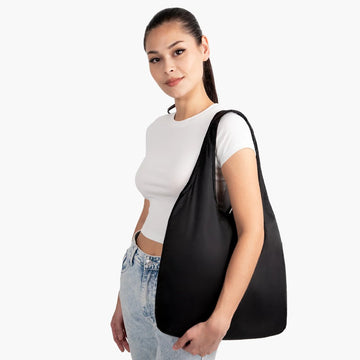
The 19L Sling weighs 0.90 oz and wears as a crossbody for hands-free carry.
The 14L Pack is a drawstring backpack at 0.95 oz for shorter rides and errands where quick access matters.
The 16L Daypack is a zippered backpack with a YKK closure at 1.15 oz for commuter cycling, day trips, and travel.
All carry the same 66 lb load rating because the fabric and construction are identical across the lineup.
For daily use, Nanobag is the better choice for anyone who wants a bag that comes with them everywhere. The combination of custom diamond ripstop nylon, bartack reinforcement, and pocket-sized packability makes Nanobag the format that fits into practically any pocket and stays with you between trips.
Jute grocery bags still work for planned shopping trips where the bag lives in the car or by the door and portability does not matter. But for daily carry across grocery runs, farmers markets, travel, and unplanned errands, Nanobag is the bag that stays with you and holds up to the way people actually shop.
Share:
Ripstop Nylon vs Cotton: Which Lasts Longer?
Reusable Bags vs Plastic Bags: Which Is Better?