
- by Ursus Negenborn
Nylon vs Polyester: Which Fabric Is Better for Bags?
- by Ursus Negenborn
Nylon and polyester are the two synthetic fabrics you will run into most often when shopping for a reusable bag, a backpack, or any daily-carry bag. On the shelf they look and feel almost identical, but under real use they behave very differently, and the differences matter more than most people realize when they pick between the two.
The short answer is that nylon outperforms polyester on the properties that matter most in a bag. It has higher tensile strength, better elasticity, and better abrasion resistance than polyester. For a bag used daily, those differences add up to meaningful gains in load capacity, longevity, and how the bag holds its shape over years of use. This article walks through the honest fabric comparison, then covers where diamond ripstop nylon takes those advantages further.
Nylon is a synthetic polymer first developed in the 1930s as a stronger, lighter alternative to natural fibers like silk. It is spun into threads with high tensile strength, meaning individual nylon fibers can hold significant load before breaking. Nylon was originally developed for parachutes and military gear where weight-to-strength ratio was critical, and it has been used in outdoor equipment and technical fabrics ever since.
For bags specifically, nylon delivers a combination that natural fibers cannot match: high load capacity at low fabric weight. This is why nylon has become the fabric of choice for backpacks, packable reusable bags, and daily-carry bags designed to hold up under real use rather than sit in a closet.
Polyester is a synthetic polymer developed around the same era as nylon. It is one of the most widely used fabrics in the world, appearing in clothing, activewear, upholstery, packaging, and bags. Polyester fibers are inexpensive to produce, resistant to UV degradation, and dry quickly after being wet. In clothing, polyester dominates the market because of these properties and the low manufacturing cost.
For bags, polyester is common in inexpensive foldable grocery bags, tote bag giveaways, and lower-cost daily bags. It folds smaller than cotton and costs less to manufacture than nylon, which is why most bags sold at supermarket checkouts are made from lightweight plain-weave polyester.
Both are synthetic fibers, and both share properties like water resistance and durability compared to natural fibers. But four differences separate them in ways that matter for a bag used every day.
Nylon has higher tensile strength than polyester at the same fiber weight. In practical terms, a nylon thread holds more load before breaking than an equivalent polyester thread. For a reusable bag, this translates to higher load capacity at less fabric weight, which is the single most important trait for a bag you actually plan to fill with groceries or gear.
Nylon has better elastic recovery than polyester. Under repeated loading, like the daily use of a reusable bag, nylon returns to its original shape more reliably. Polyester tends to develop permanent deformation over time in high-stress areas like handles and shoulder straps. Polyester bags get damaged easier than Nylon bags and it’s why older polyester bag handles start to sag while nylon bag handles hold their form for years.
Nylon holds up significantly better than polyester against surface wear and friction. Bags get set down on rough surfaces, stuffed into other bags, and folded and unfolded thousands of times over their lifespan. Nylon fibers resist this wear longer, which is why nylon bags typically last several years of daily use while polyester bags often wear through at contact points within one to two seasons.
Nylon and polyester both have their place, but the applications look different. Polyester dominates in clothing and activewear because of its wrinkle resistance, quick drying, and low cost. It also appears in inexpensive foldable grocery bags where price is the primary consideration and the bag is not expected to last more than a season or two.
Nylon dominates in premium bags built for daily use. Reusable shopping bags, backpacks, sling bags, and daily-carry bags where the fabric needs to hold real weight and last through years of loading. The combination of high tensile strength, low fabric weight, and abrasion resistance is what makes nylon the better choice for any bag you plan to actually use rather than store in a drawer.
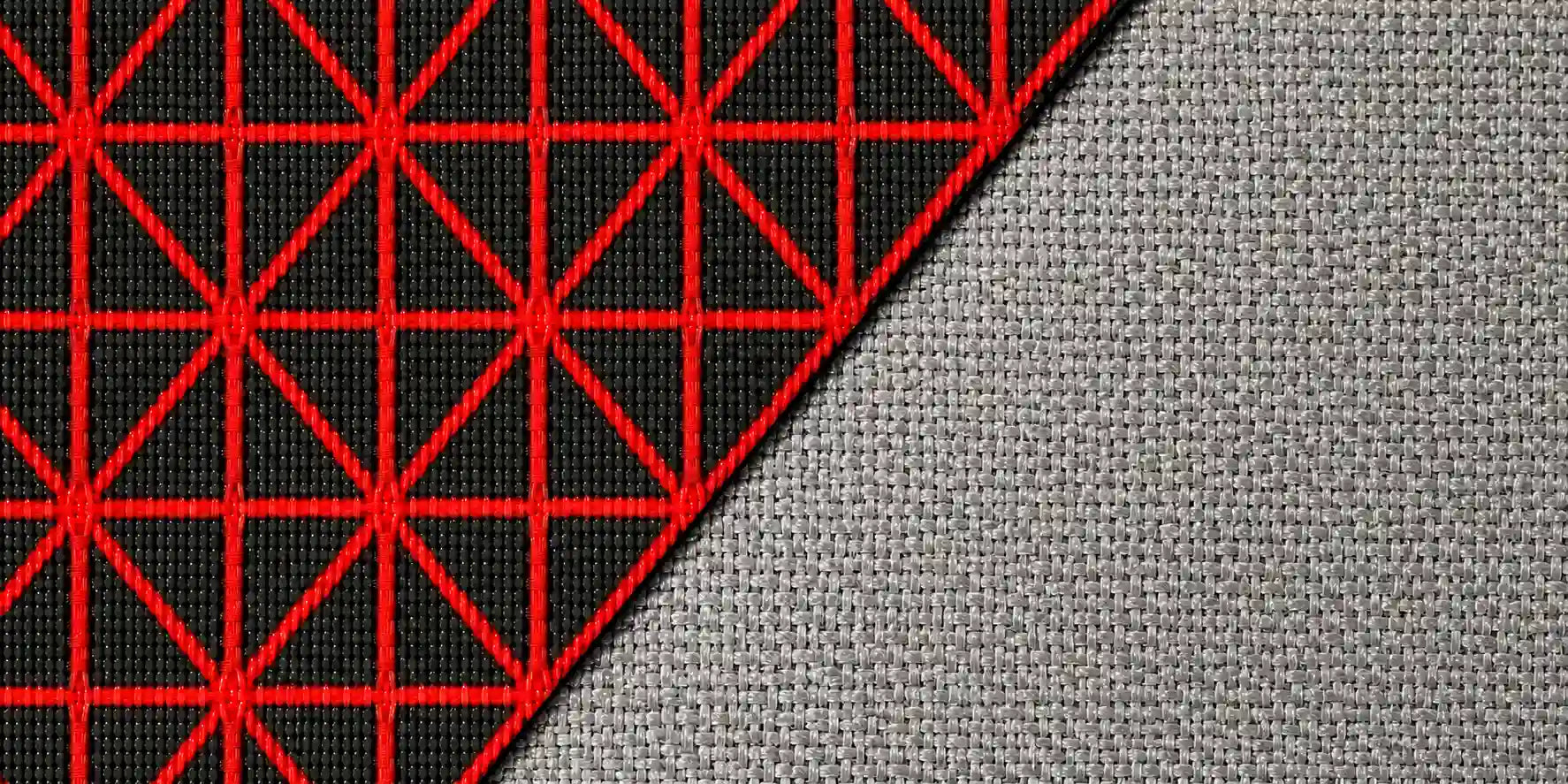
Standard nylon already outperforms polyester in bags. Diamond Ripstop nylon takes those advantages further. The diamond ripstop weave is a manufacturing technique where reinforcement threads are woven into the fabric at regular intervals in a diamond or crosshatch pattern. When a small tear starts, the reinforcement threads stop it from spreading, which turns a potential failure into a small, contained mark. For more on how the weave works, see the guide to diamond ripstop fabric.
Applied to nylon, the diamond ripstop weave amplifies what nylon already does well. It adds tear resistance on top of the fiber's high tensile strength, which lets diamond ripstop nylon bags carry heavier loads at lighter fabric weights than standard nylon can achieve. This combination is why the best reusable shopping bags built for daily use are made from diamond ripstop nylon specifically, not standard nylon and not any form of polyester.
Ripstop polyester exists and improves on plain-weave polyester meaningfully, but it does not close the gap with diamond ripstop nylon. The base fiber properties still matter, and nylon retains its advantages in tensile strength, elasticity, and abrasion resistance no matter which weave is applied.
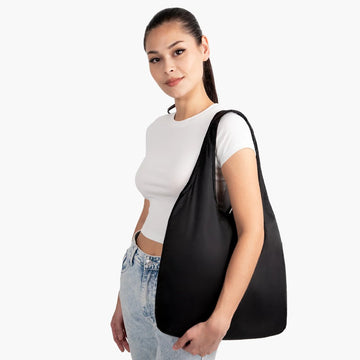
Nanobag builds every reusable shopping bag in the lineup from custom diamond ripstop nylon at 0.05mm thickness with a PFC-free water-repellent coating, paired with bartack reinforcement at every stress point and double-stitched piping along the seams. This construction delivers a 66 lb (30 kg) load rating in bags weighing less than an ounce empty in the lightest models, a combination that no polyester bag matches at the same weight class.
The Nanobag lineup covers every reusable shopping bag format from a single construction.
The 12L Micro weighs 0.80 oz and handles quick errands.
The 19L Standard tote weighs 0.90 oz and covers a full grocery run.
The 25L XL weighs 1.05 oz and handles farmers market hauls.
The 19L Sling weighs 0.90 oz and wears as a crossbody for hands-free carry.
The 14L Pack is a drawstring backpack at 0.95 oz for shorter rides and errands.
The 16L Daypack is a zippered backpack with a YKK closure at 1.15 oz for commuter cycling, day trips, and travel.
Every model carries the same 66 lb load rating because the fabric and construction are identical across the lineup. Every Nanobag sold funds the planting of one tree through Eden People + Planet.
For a reusable shopping bag, daily-carry bag, or any bag you plan to actually use every day, nylon is the stronger choice. Diamond ripstop nylon takes those advantages further and is the format used in the best-engineered reusable bags on the market today. Plain-weave polyester works as a low-cost, short-term solution for shoppers who only need a foldable grocery bag for occasional use, but it does not hold up under repeated daily loading the way nylon does. If the goal is one bag that lasts for years and handles everything from the corner store to the farmers market, diamond ripstop nylon is the answer.
Share:
Reusable Bags vs Plastic Bags: Which Is Better?
How to Choose the Best Reusable Shopping Bag