
- by Ursus Negenborn
Reusable Bags vs Plastic Bags: Which Is Better?
- by Ursus Negenborn
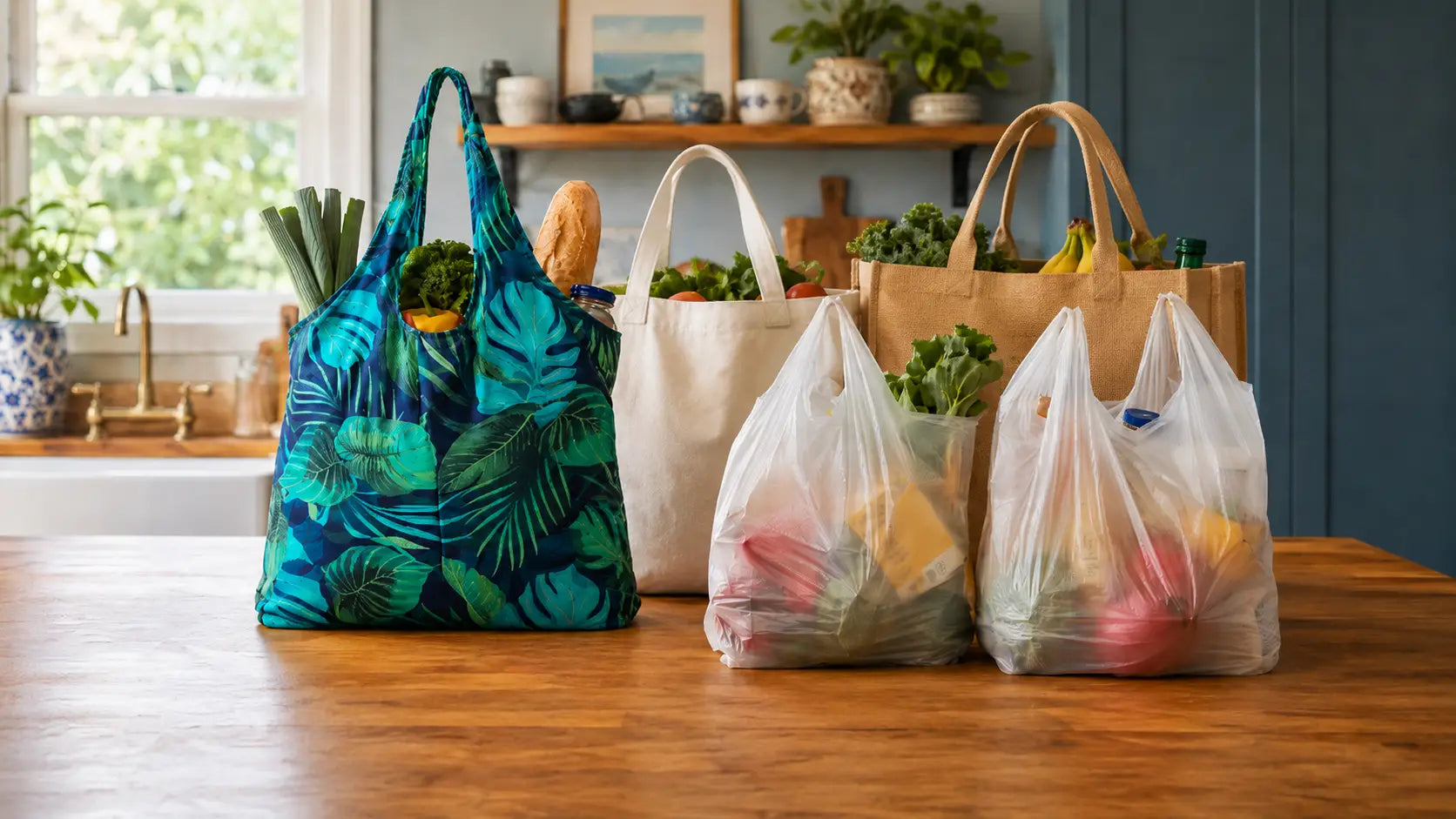
Reusable bags outperform plastic bags on nearly every measure that matters in daily use. They carry more weight without tearing, last for years instead of a single trip, and cost less over time than a lifetime of plastic bag purchases. The one advantage plastic bags used to hold, always being available at the checkout counter, has largely disappeared. Modern packable reusable bags pack down to nearly nothing and travel easily with you between trips, which means the bag is genuinely there when you need it.
The comparison comes down to four practical measures: durability under real weight, carrying comfort and load distribution, cost over time, and everyday convenience.
Plastic bags are the thin, single-use bags handed out at grocery store checkouts, retail counters, and takeout windows. They are designed for one purpose: getting your purchase home. Once emptied, they are usually thrown away, sometimes reused as small trash bin liners, and occasionally recycled through specialty programs. The vast majority end up in landfills within days of being taken home.
Reusable bags are shopping bags designed for repeated use. They come in a range of materials, from thick cotton canvas to lightweight ripstop nylon, and are built to handle heavier loads and years of use. Good reusable bags fold down small enough to carry with you between trips, so the bag is available whether the shopping trip is planned or spontaneous.
This is the difference that shows up first in daily use. Plastic bags tear easily. A can of soup, a jar of pasta sauce, or a sharp corner on a box of cereal can put a hole in a plastic bag before you reach the car. Overloading a plastic bag causes the handles to stretch, the seams to split, or the entire bag to give way at the worst possible moment. A regular plastic bag can typically only carry 10 to 15 lb of weight, and it often needs a second bag when the load includes anything heavy.
Reusable bags are engineered for weight. Well-made reusable bags handle full grocery hauls, farmers market runs, and heavy items without stretching or tearing. The handles are stitched to distribute load across the bag rather than concentrating it at two thin plastic loops. A well engineered reusable bag can carry 60+ lb loads. For more on how load capacity actually works across different reusable bag materials, see the guide to how much weight reusable bags can hold.
Anyone who has walked home from the store with heavy plastic bags knows how quickly the handles start cutting into your hands. Plastic bags concentrate all their weight on two thin loops with no give, and there is only one way to carry them, in your hands, one bag per hand until you run out of hands. Loading past a few pounds turns any walk home into a race against handle failure and hand fatigue.
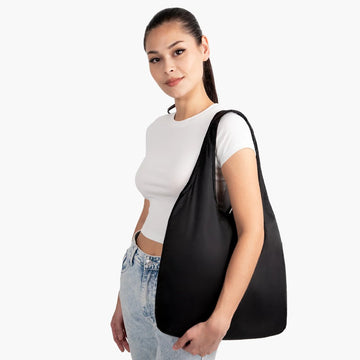
Reusable bags handle weight the way bags should. The handles are wider, the load spreads across the bag, and the carrying options open up entirely. A tote can hang from a shoulder. A sling wears across the chest for hands-free carry. A backpack distributes weight across both shoulders, which is the difference between a comfortable walk home and an ache in your arm from the parking lot.
A single plastic bag is nearly free at the point of purchase, but the actual cost adds up in ways that are easy to miss. Many grocery stores now charge for plastic bags at checkout, and many jurisdictions have added bag fees or outright bans. The costs add up over time, and even without a per-bag charge, the plastic bags that pile up in your kitchen drawer, at some point will end up as a cost to the environment.
A reusable bag is a one-time purchase that replaces those repeated small charges. A reusable bag pays for itself within months if you actually remember to bring it with you. A durable reusable bag lasts for years, which means the effective cost per trip drops to nearly zero after the first few months of use.
Plastic bags win on one thing: they are always there when you check out. You never have to remember to bring them. That is the main practical advantage they hold over reusable bags, and it is why so many well-intentioned owners still default to plastic at checkout.
The reusable bag category has largely solved this problem in the last few years. Modern reusable bags are lighter, stronger, and more compact than they used to be. The old objections (they are bulky, heavy, and inconvenient to carry between trips) do not apply to today's packable designs. A well-made reusable bag today weighs a fraction of what a comparable bag weighed a decade ago and holds significantly more weight. A Nanobag, for example, weighs less than an ounce and folds into an attached pouch that lives in a pocket between trips. When the reusable bag is with you every time, the plastic bag advantage disappears entirely.
Plastic bags do not biodegrade meaningfully. They persist in landfills, waterways, and the environment for decades, breaking down into smaller fragments rather than disappearing. Every household adds to this waste with every shopping trip that uses plastic bags.
A single durable reusable bag replaces hundreds of plastic bags across its lifetime. The environmental benefit compounds with every use, which means bags that actually get used often deliver the most impact.
Nanobag builds this commitment into every sale. Every Nanobag sold funds the planting of one tree through Eden People + Planet, a reforestation nonprofit that works with rural communities across Africa and Asia. The result is a bag that reduces plastic waste and contributes to reforestation at the same time.
Nanobag is designed specifically to solve the convenience problem that keeps most shoppers stuck on plastic bags. Every bag in the Nanobag lineup folds into an attached pouch small enough to fit in a pocket or purse. The bag travels with you between trips, deploys in seconds when you need it, and holds up under grocery loads that would destroy a plastic bag.
The lineup covers every use case:
The 12L Micro weighs 0.80 oz and handles quick errands.
The 19L Standard tote weighs 0.90 oz and covers full grocery runs.
The 25L XL weighs 1.05 oz and handles farmers market hauls.
The 19L Sling weighs 0.90 oz and wears as a crossbody for hands-free carry.
The 14L Pack is a drawstring backpack at 0.95 oz for shorter rides and errands.
The 16L Daypack is a zippered backpack with a YKK closure at 1.15 oz for commuter cycling, day trips, and travel.
Every model uses custom diamond ripstop nylon with a PFC-free water-repellent coating and bartack reinforcement at every stress point, which is how the bags reach a 66 lb (30 kg) load rating across the lineup.
Reusable bags outperform plastic bags on almost every measure that matters. They carry more weight, last for years instead of a single trip, cost less over time, and, with modern packable designs, they are just as convenient at the moment of purchase. The old convenience advantage plastic bags held is gone once a reusable bag actually lives in your pocket. For anyone still choosing between the two, the choice has genuinely gotten easier in the last few years.
Share:
Ripstop Nylon vs Jute: Which Is More Practical?
Nylon vs Polyester: Which Fabric Is Better for Bags?